Reducing Energy Bills in Virginia Beach, VA
Challenge
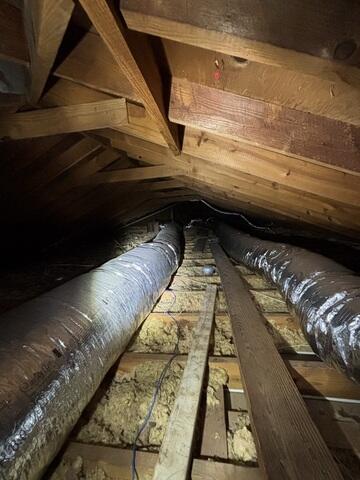
Milton in Virginia Beach contacted us about uncomfortable rooms and higher-than-desired energy bills in his 1,700-square-foot home. His attic had R-19 or less blown fiberglass insulation, no air sealing, and 57 recessed can lights.
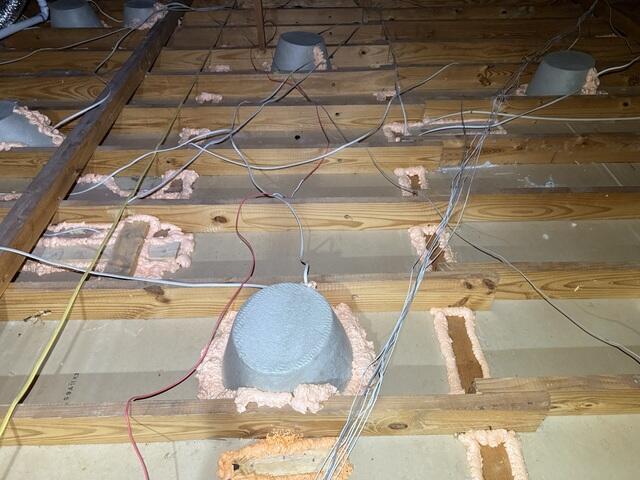
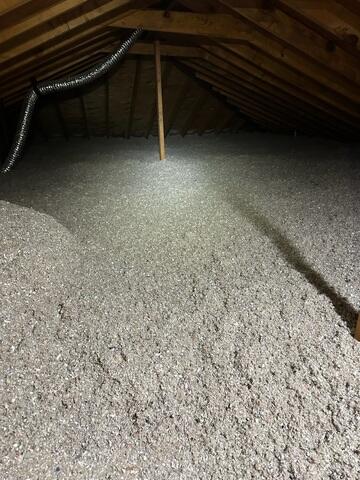
Alex recommended a comprehensive attic improvement project that included removing the existing insulation, air sealing, sealing the recessed can lights with covers, installing insulation dams where needed, adding ventilation baffles (PVs), and installing R-49 cellulose insulation. Because Milton was particularly concerned about making sure the can lights were effectively sealed, Alex also included before-and-after blower door testing to verify the results.
Solution
While the crew began removing the existing insulation, Alex and Tyler performed the initial blower door test. Based on the results, the home’s estimated natural air exchange rate was 50% of its air volume per hour, equivalent to approximately 12 whole-house air exchanges over a 24-hour period.
Air leakage or air loss, expressed through a home’s air exchange rate, has a significant impact on both comfort and energy use. As conditioned air escapes through gaps and openings in the ceiling, your heating and cooling system is constantly conditioning air to replace it. In colder months, warm air rises into your attic and during hotter months, hot, humid air enters your home making it hard to keep comfortable.
Recessed lighting or canned lights can be a major part of the equation when considering air loss if they are not properly sealed. One small opening may not be a lot, but homes with several, recessed can lights leak a lot more air than you think. Each unsealed fixture is a small opening between the living space and attic. When dozens of these openings are spread through the ceiling, their combined effect can become very significant.
It’s like trying to heat or cool a room while leaving windows cracked open. Your HVAC may still reach your thermostat setting, but it’s working against all the pathways conditioned air is escaping or outside air is coming in.
This is why just adding more insulation isn’t always the complete solution. Insulation slows heat transfer while air sealing helps stop unwanted air movement. Air sealing allows the insulation to do its job more effectively.
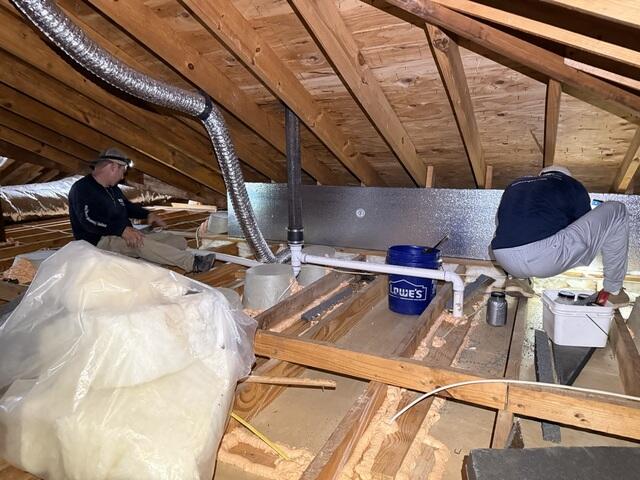
Justin, Abdul, and Zach completed the insulation removal and finished most of the air sealing and ventilation baffles on day one. On day two, they completed the remaining air sealing and installed the insulation dams.
Once the air sealing was complete, Tyler and Alex performed the follow-up blower door test and used smoke testing to verify that all 57 can lights had been effectively sealed.
The results showed a measurable improvement. The home’s estimated air exchange rate dropped from 50% to 43.5% per hour, a 13% reduction in air leakage.
With the air sealing, sealed can lights, and R-49 cellulose insulation, Milton can expect improved comfort throughout his home while reducing unwanted air movement through the attic.
The testing also helped identify additional opportunities for future improvements. The home’s vented crawl space and existing exterior windows and doors offer additional areas where Milton could improve the home’s overall airtightness.